
Baroque Architecture: History, Characteristics, Famous Buildings & Art
Explore the grandeur of Baroque architecture, from its history and key characteristics to famous buildings in Italy, France, and India. Learn about Baroque art, interior design, and the masters like Bernini who shaped this dramatic style. Perfect for architecture enthusiasts and design professionals.
11/13/20253 min read
Baroque Architecture: Grandeur, History, and Enduring Influence
Baroque architecture represents one of history’s most dramatic and emotionally charged artistic movements, masterfully fusing power, fine art, and spiritual symbolism. Originating in 17th-century Europe, this transformative style turned conventional cities, cathedrals, and royal residences into sweeping, theatrical spectacles defined by light, motion, and immense scale.
Even today, leading designers and architects, including one of the best architects in Indore, Madhya Pradesh, Ideaform Design Studio, continue to draw creative inspiration from Baroque design's audacious drama and spirit of artistic liberation.
Defining the Baroque Architectural Style
Baroque architecture is characterized by its expressive grandeur, intricate detailing, and intense focus on evoking emotion and dynamism. In stark contrast to the ordered symmetry of Renaissance design, the Baroque style was deliberately crafted to awe and overwhelm the observer. It uses space, illumination, and elaborate decoration to generate a powerful, immersive sensory experience.
This style quickly became the dominant visual language of both religious faith and secular authority, notably promoted by the Catholic Church during the Counter-Reformation.
The History and Genesis of Baroque Architecture
The genesis of Baroque architecture is traced back to late 16th-century Italy, primarily Rome, where innovative artists like Gian Lorenzo Bernini and Francesco Borromini pioneered experiments with dynamic forms and complex spatial arrangements.
The style swiftly migrated across the continent to Spain, France, and even distant parts of the world like India, where colonial expansion introduced Baroque motifs into civil and religious structures.
In Italy, monumental projects such as St. Peter’s Basilica and Sant’Agnese in Agone became potent symbols of divine power.
In France, architects refined the style, embracing a more controlled, classical elegance, perfectly exemplified by the Palace of Versailles.
In India, elements of Baroque design are beautifully preserved in the Portuguese churches of Goa, showcasing elaborate façades and curved rooflines that represent a seamless fusion of European and local artistry.
The Core Characteristics of the Baroque Style
The four primary features that define Baroque architecture are:
Theatrical Light and Shadow: Architects expertly manipulated light (chiaroscuro) to create dramatic contrasts, highlight key forms, and evoke deep emotional responses.
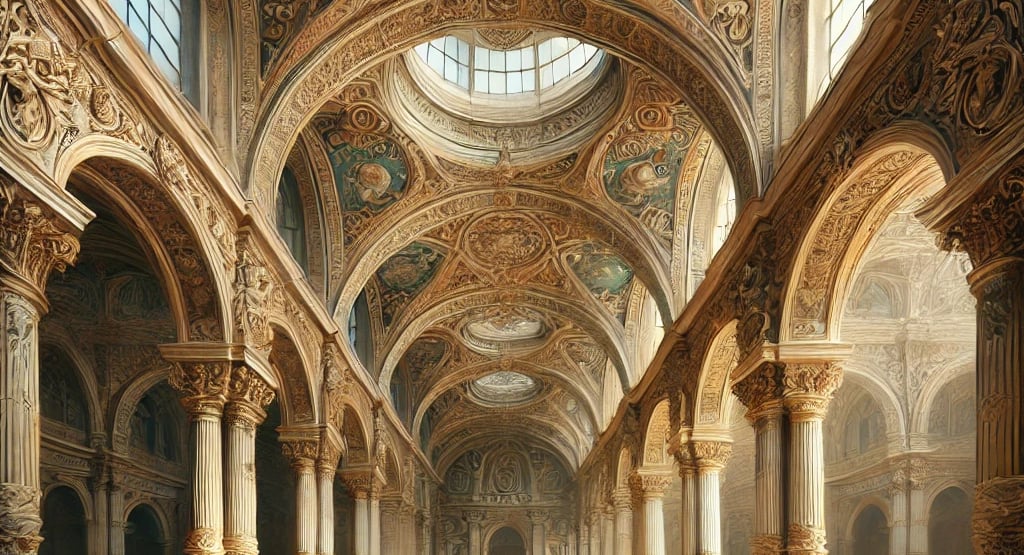
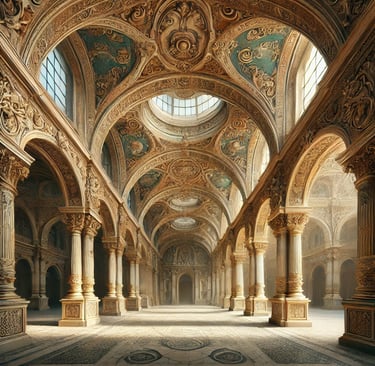
Intense Ornamentation: Surfaces were densely covered with intricate sculptures, elaborate gilded moldings, rich plasterwork (stucco), and dynamic frescoes.
Dynamic Movement and Form: Rigid geometry was abandoned in favor of flowing, curved façades, broken pediments, and undulating walls, suggesting motion.
Monumental Scale and Luxury: Buildings were conceived to impress, featuring monumental proportions, massive columns, colossal domes, and the use of opulent materials like colored marble.
Together, these elements produced structures that were as deeply emotional as they were structurally impressive, a defining trait of the Baroque movement.
Iconic Baroque Masterpieces
The most celebrated example of Baroque architecture is undoubtedly St. Peter’s Basilica in Rome, a collaborative effort featuring the genius of Bernini, Michelangelo, and Maderno. It stands as a flawless convergence of architecture, spirituality, and sculpture.
Other globally recognized Baroque landmarks include:
Versailles Palace in France
St. Paul’s Cathedral in London
The Church of the Gesù in Rome
Each of these structures powerfully embodies the spirit of the Baroque style: emotional depth, flowing design, and comprehensive artistic unity.
Baroque Interiors and Modern Echoes
Baroque interior design is just as lavish and intricate as its exterior. Interiors are defined by rich decoration, sculptural furniture, gilded frames, and intricate tapestries. Walls and ceilings are frequently adorned with trompe-l'œil frescoes, creating the illusion of boundless skies or celestial scenes.
Today, components of this style are seeing a resurgence in Neo-Baroque design from grand hotel lobbies to artistically inspired private homes, demonstrating the remarkable lasting influence of this 17th-century aesthetic on contemporary spaces.
The Architect Behind the Movement
The distinction of “Father of Baroque Architecture” is universally given to Gian Lorenzo Bernini. Renowned for his unparalleled ability to integrate sculpture, painting, and architecture, Bernini’s masterworks, such as the Baldachin of St. Peter’s and the Cornaro Chapel, perfectly capture the Baroque ethos: dynamic, profoundly emotional, and divine.
Origin of the Name- Baroque
The term “Baroque” originates from the Portuguese word “barroco”, meaning an irregular or imperfect pearl. Initially, the term was used negatively as criticism for art perceived as overly ornate or extravagant. However, it later evolved into the established name for a distinct, influential style characterized by complexity, dramatic power, and sheer creative brilliance that irrevocably reshaped European architecture.
Conclusion
From the magnificent cathedrals of Rome to the opulent palaces of France and the colonial churches of India, Baroque architecture stands as one of the most expressive and enduring art forms ever conceived. Its grand legacy continues to resonate through modern design and interiors, successfully inspiring both emotion and awe centuries after its inception.
Architectural studios, like Ideaform Design Studio, where Creativity Meets Functionality. To explore innovative design solutions or discuss your next architectural project, contact us at +91-099930 24999. You can also visit our office in Indore, Madhya Pradesh, at 185, near Annapurna Road, Sector D, Vishwakarma Nagar, Indore, Madhya Pradesh 452009. Ideaform Design Studio often draws from this monumental heritage to craft unique spaces that perfectly balance innovation, aesthetic beauty, and emotional resonance.
Follow us
Studio
hello@ideaformdesignstudio.com
+91 99930 24999
Contact us
Copyright © 2026 Ideaformdesignstudio. All Rights Reserved |Development & Digital Marketing ❤️ by 10XD
architectural firm in indore | top architecture firm in indore | top architect firm in indore |top architect in indore | architecture company in indore | best architectural firm in indore |best architects in indore | architects in indore madhya pradesh | famous architect in indore |indore best architect | best architect for home design | best residential architect | award winning residential architect | best residential architecture firm | architects for residential homes |residential architect services | best home architect | home builders | residential architecture firm |architects for commercial buildings | architect commercial building | commercial building design |best commercial building design | best commercial architects | architects for commercial projects |commercial architectural services | commercial architectural services |township design | landscape architect | residential landscape architect | best landscape designer | best landscape architect | township planner |landscape architect residential | landscape architect firm | landscape designer | airport architect | urban space architects | public place design | best interior designer in indore | indore best interior designers | interior design company in indore interior design firms in indore | top interior designer in indore | interior design company | interior designer in indore | interior design firm best interior design company | best interior designer indore | interior designers residential | home designer and architect | interior design for residential house home designer | residential designers | residential interior design | interior designers for office space | commercial interior designer | corporate interior designer | commercial interior design company | corporate interior design firm