Role of Urban Design in Community Development
Urban design is not just about creating buildings, roads, or attractive city layouts. It is about shaping the way people live, interact, work, and grow together. A well-designed urban environment influences social connections, economic growth, public health, sustainability, and overall quality of life.
4/10/20263 min read
Urban design is not just about creating buildings, roads, or attractive city layouts. It is about shaping the way people live, interact, work, and grow together. A well-designed urban environment influences social connections, economic growth, public health, sustainability, and overall quality of life.
At Ideaform Design Studio, urban design is viewed as a powerful tool that transforms spaces into thriving community places where people feel connected, safe, and inspired.
Understanding Urban Design
Urban design sits at the intersection of architecture, planning, landscape design, transportation, and social science. It focuses on how cities and neighborhoods function as a whole rather than individual structures alone.
Urban design answers important questions such as the following:
How do people move through a city?
Are public spaces welcoming and inclusive?
Does development encourage community interaction?
Can the environment support future growth sustainably?
A successful urban design approach balances functionality, aesthetics, and human experience.
Urban Design as the Foundation of Community Development
Community development is about improving people’s lives socially, economically, and environmentally. Urban design becomes the physical framework through which these improvements happen.
1. Creating Socially Connected Spaces
Communities thrive when people interact. Urban design encourages this through:
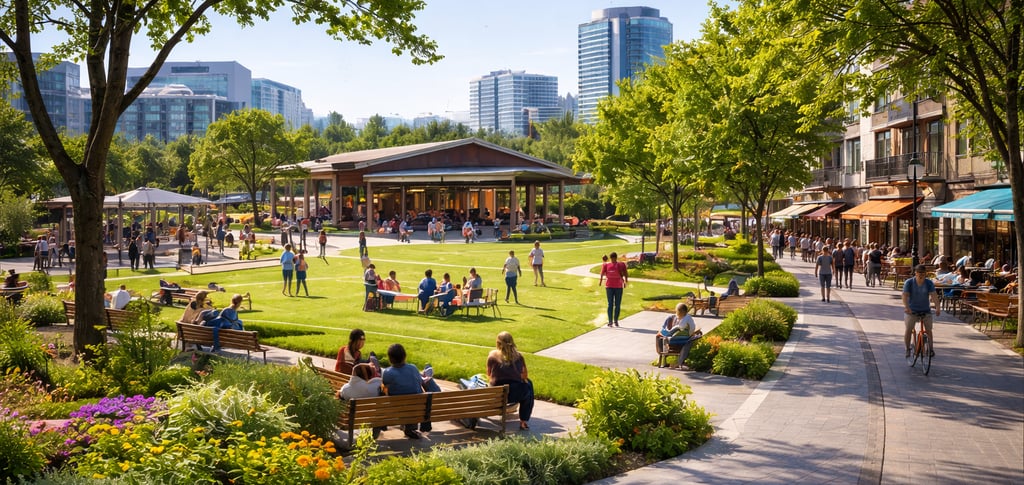
Public parks and open spaces
Walkable streets
Community plazas and gathering areas
Mixed-use developments
When residents have safe and accessible places to meet, relationships grow stronger. Social interaction reduces isolation and builds a sense of belonging.
Urban design transforms neighborhoods from simply “places to live” into “places to connect.”
2. Promoting Walkability and Accessibility
Modern urban planning prioritizes people over vehicles. Walkable environments promote healthier lifestyles while reducing traffic congestion and pollution.
Key elements include the following:
Pedestrian-friendly streets
Cycling infrastructure
Accessible public transportation
Barrier-free design for all age groups
When daily needs such as markets, schools, and workplaces are accessible within short distances, communities become more active and sustainable.
3. Strengthening Local Economies
Urban design directly influences economic development. Well-planned commercial zones and mixed-use districts attract businesses, tourism, and investment.
Active street fronts, organized marketplaces, and vibrant public spaces encourage local entrepreneurship. Small businesses benefit from increased foot traffic, while residents gain employment opportunities close to home.
Strategic urban design supports economic resilience by creating environments where commerce naturally flourishes.
4. Enhancing Safety and Well-Being
Design has a direct impact on how safe people feel in a neighborhood.
Good urban design incorporates:
Proper lighting
Clear visibility and open sightlines
Active public spaces
Safe pedestrian crossings
When spaces remain active throughout the day, natural surveillance increases, reducing crime risks and improving community confidence.
Safety is not only about policing; it is also deeply connected to thoughtful spatial planning.
5. Environmental Sustainability and Green Infrastructure
Urban development today must respond to climate challenges. Sustainable urban design integrates nature into city planning.
Important strategies include:
Urban green spaces and biodiversity zones
Rainwater management systems
Energy-efficient layouts
Climate-responsive building orientation
Green infrastructure improves air quality, reduces heat islands, manages flooding, and enhances mental well-being. Communities connected with nature tend to be healthier and more resilient.
6. Inclusive and Equitable Development
Urban design plays a vital role in ensuring that development benefits everyone, not just a select group.
Inclusive design considers:
Affordable housing options
Universal accessibility
Cultural diversity
Community participation in planning
When residents are involved in shaping their surroundings, they develop ownership and pride in their community.
True community development happens when spaces serve people from all social and economic backgrounds.
The Importance of Public Spaces
Public spaces are often called the “living room of the city.” Parks, waterfronts, streetscapes, and community centers encourage cultural exchange and shared experiences.
Successful public spaces:
Encourage recreation and relaxation
Support cultural activities and festivals
Improve mental health
Strengthen local identity
Urban design gives these spaces structure, purpose, and life.
Urban Design and Future Cities
Cities worldwide are growing rapidly. The future of urban development depends on intelligent planning that balances growth with livability.
Emerging urban design trends include:
Smart city infrastructure
Transit-oriented development
Mixed-use neighborhoods
Sustainable mobility systems
Human-centric planning approaches
Future communities will prioritize flexibility, resilience, and environmental responsibility.
Role of Design Studios in Community Transformation
Professional design practices play a critical role in translating urban visions into reality. A multidisciplinary approach ensures that architecture, infrastructure, landscape, and social needs work together seamlessly.
Ideaform Design Studio believes urban design is more than creating physical environments; it is about crafting meaningful experiences. By combining innovative thinking, contextual understanding, and sustainable strategies, the studio aims to design communities that evolve with people and time.
Challenges in Urban Community Development
Despite its importance, urban design faces several challenges:
Rapid urbanization and population growth
Infrastructure pressure
Environmental degradation
Social inequality
Unplanned development
Addressing these challenges requires collaboration between planners, architects, government authorities, and local communities.
Why Urban Design Matters More Than Ever
Today’s cities are not just centers of economic activity; they are ecosystems where human life unfolds daily. Thoughtful urban design improves:
Quality of life
Social harmony
Economic opportunity
Environmental balance
Cultural identity
Well-designed cities do not happen by accident; they are carefully imagined, planned, and executed.
Conclusion
Urban design is the silent force shaping how communities grow and function. It influences how people interact, how economies develop, and how sustainable a city becomes. When design prioritizes human experience, communities transform into vibrant, inclusive, and resilient environments.
At Ideaform Design Studio, urban design is approached as a long-term commitment to community development, creating spaces that not only look beautiful but also support meaningful living, social connection, and sustainable progress.
Follow us
Studio
hello@ideaformdesignstudio.com
+91 99930 24999
Contact us
Copyright © 2026 Ideaformdesignstudio. All Rights Reserved |Development & Digital Marketing ❤️ by 10XD
architectural firm in indore | top architecture firm in indore | top architect firm in indore |top architect in indore | architecture company in indore | best architectural firm in indore |best architects in indore | architects in indore madhya pradesh | famous architect in indore |indore best architect | best architect for home design | best residential architect | award winning residential architect | best residential architecture firm | architects for residential homes |residential architect services | best home architect | home builders | residential architecture firm |architects for commercial buildings | architect commercial building | commercial building design |best commercial building design | best commercial architects | architects for commercial projects |commercial architectural services | commercial architectural services |township design | landscape architect | residential landscape architect | best landscape designer | best landscape architect | township planner |landscape architect residential | landscape architect firm | landscape designer | airport architect | urban space architects | public place design | best interior designer in indore | indore best interior designers | interior design company in indore interior design firms in indore | top interior designer in indore | interior design company | interior designer in indore | interior design firm best interior design company | best interior designer indore | interior designers residential | home designer and architect | interior design for residential house home designer | residential designers | residential interior design | interior designers for office space | commercial interior designer | corporate interior designer | commercial interior design company | corporate interior design firm