
Smart Design Secrets: How to Make Small Spaces Feel Bigger, Brighter, and More Functional
Living in a compact home or working within limited square footage doesn’t mean compromising comfort or style. In fact, small spaces often inspire the most creative and thoughtful design solutions. The secret is not about having more space; it’s about using space intelligently.
4/16/20264 min read
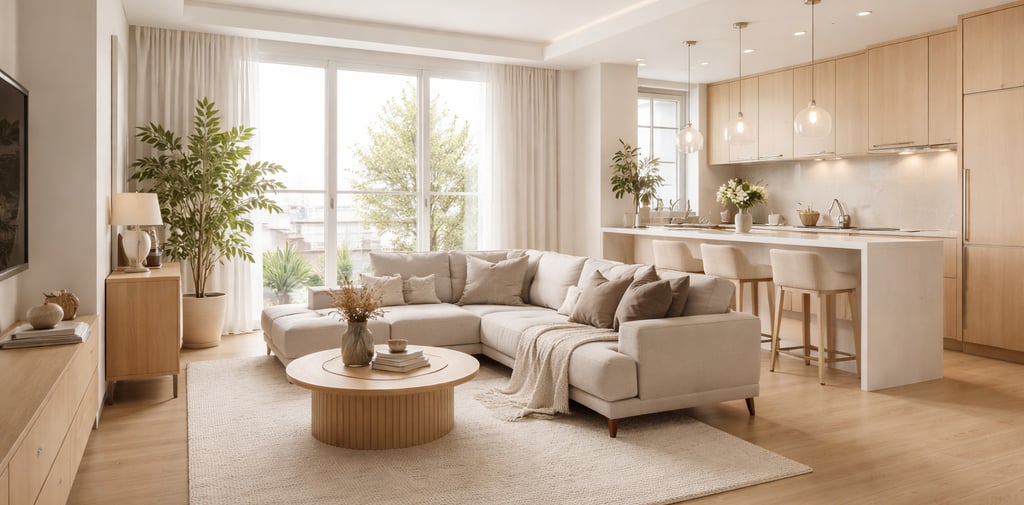
Living in a compact home or working within limited square footage doesn’t mean compromising comfort or style. In fact, small spaces often inspire the most creative and thoughtful design solutions. The secret is not about having more space; it’s about using space intelligently.
At Ideaform Design Studio, we believe that great design is measured by how a space feels, not just how large it is. With the right planning, visual tricks, and functional layouts, even the smallest apartment, office, or room can feel open, organized, and beautifully spacious.
Let’s explore practical design strategies that truly transform small spaces.
Understanding the Psychology of Space
Before choosing furniture or colors, it’s important to understand how people perceive space.
A room feels larger when:
Light moves freely
Sightlines remain uninterrupted
Clutter is minimized
Proportions are balanced
Human eyes naturally interpret openness as comfort. Even without increasing square footage, smart design decisions can create a feeling of expansion.
Small spaces succeed when every element serves both aesthetic and functional purposes.
Start with smart space planning.
The biggest mistake people make is filling a small room the same way they would design a large one.
Instead of adding more furniture, focus on purpose-driven layout planning.
Ask yourself:
What activities happen here daily?
Which furniture is essential?
Can one item serve multiple uses?
Creating movement pathways instantly makes a room feel larger. Leaving intentional empty areas allows the eye to rest, which psychologically expands space.
At Ideaform Design Studio, we often redesign layouts before changing décor, and clients are surprised how much bigger their rooms instantly feel.
Choose the Right Color Palette
Color plays one of the strongest roles in spatial perception.
Best color strategies for small spaces:
Use light neutral tones as base colors
Maintain color continuity between rooms
Avoid heavy contrast on walls
Use soft textures instead of bold patterns
Light shades reflect natural light, making walls appear farther apart. This doesn’t mean everything must be white. Warm beiges, soft greys, muted pastels, and earthy neutrals work beautifully while maintaining personality.
A consistent color flow prevents visual breaks that make rooms feel smaller.
Let natural light become your design partner.
Nothing enlarges a space faster than light.
Natural light removes visual boundaries and creates openness. If windows are small, avoid blocking them with heavy curtains or dark blinds.
Simple improvements include:
Sheer curtains instead of thick drapes
Mirrors placed opposite windows
Minimal window framing
Clean glass surfaces
Artificial lighting matters too. Layered lighting, ceiling lights, wall lights, and subtle accent lighting—remove shadows that shrink a room visually.
Good lighting doesn’t just illuminate; it expands.
Use Mirrors Strategically
Mirrors are one of the oldest and most effective design tricks.
A well-placed mirror:
Reflects light
Extends visual depth
Doubles perceived space
Large mirrors or mirrored panels create an illusion of additional square footage. Instead of many small mirrors, one statement mirror often works better.
Placement is important to reflect something beautiful, not clutter.
Think Vertical, Not Horizontal
When floor space is limited, the solution lies upward.
Vertical design draws the eye higher, making ceilings feel taller and rooms more open.
Consider:
Tall shelving units
Vertical storage systems
Floor-to-ceiling curtains
Slim wardrobes extending upward
Vertical lines guide visual movement upward, creating height perception even in compact rooms.
Select Furniture That Works Harder
Bulky furniture overwhelms small spaces. Scale and proportion matter more than price or style.
Ideal furniture choices include:
Multi-functional pieces
Foldable dining tables
Storage beds
Nesting tables
Wall-mounted desks
Furniture with exposed legs also helps because visible flooring creates visual continuity, making the room appear larger.
At Ideaform Design Studio, we often recommend fewer but smarter furniture pieces instead of overcrowding rooms.
Reduce Visual Clutter
Clutter is the biggest enemy of small spaces.
Even beautifully designed interiors feel cramped when too many objects compete for attention.
Simple decluttering principles:
Keep surfaces clean
Hide storage wherever possible
Use closed cabinets for daily items
Display fewer décor pieces with intention
Minimalism doesn’t mean empty; it means purposeful.
A calm visual environment instantly creates spaciousness.
Create Zones Without Building Walls
Open layouts work exceptionally well in small homes.
Instead of dividing rooms with walls, create functional zones using:
Rugs
Lighting variations
Furniture placement
Color accents
For example, a sofa can define a living area while a rug establishes a dining zone all within the same room.
This approach maintains openness while improving usability.
Flooring Continuity Makes a Big Difference
Changing flooring between rooms visually breaks space into smaller sections.
Whenever possible:
Use the same flooring throughout connected areas
Avoid heavy patterns
Choose lighter tones
Use larger tiles or planks
Continuous flooring guides the eye smoothly from one area to another, creating an expansive feeling.
Smart Storage is Invisible Design
Good storage doesn’t announce itself; it blends seamlessly.
Hidden storage solutions include:
Under-bed drawers
Built-in wall cabinets
Floating shelves
Seating with storage compartments
When storage is integrated into architecture rather than sitting separately, rooms instantly feel cleaner and bigger.
Use Texture Instead of Excess Decoration
Instead of filling a room with multiple decorative items, introduce interest through textures:
Linen fabrics
Wooden finishes
Matte metals
Subtle patterns
Texture adds depth without overcrowding visual space.
A thoughtfully layered room feels rich yet spacious.
Small Spaces Need Strong Design Intent
Designing small spaces successfully requires clarity. Every element must support comfort, functionality, and openness.
At Ideaform Design Studio, we approach compact interiors with one guiding principle:
Design should simplify life, not complicate it.
When layout, lighting, materials, and furniture work together, even limited square footage can feel luxurious.
Final Thoughts: Bigger Is a Feeling, Not a Measurement
A spacious home isn’t defined by size alone. It’s defined by how effortlessly you can live within it.
With intelligent planning, thoughtful design choices, and attention to detail, small spaces can feel brighter, calmer, and far more functional than oversized homes filled without purpose.
The goal is not to chase more space but to design smarter space.
Because when design works intelligently, small spaces don’t feel small at all.
Follow us
Studio
hello@ideaformdesignstudio.com
+91 99930 24999
Contact us
Copyright © 2026 Ideaformdesignstudio. All Rights Reserved |Development & Digital Marketing ❤️ by 10XD
architectural firm in indore | top architecture firm in indore | top architect firm in indore |top architect in indore | architecture company in indore | best architectural firm in indore |best architects in indore | architects in indore madhya pradesh | famous architect in indore |indore best architect | best architect for home design | best residential architect | award winning residential architect | best residential architecture firm | architects for residential homes |residential architect services | best home architect | home builders | residential architecture firm |architects for commercial buildings | architect commercial building | commercial building design |best commercial building design | best commercial architects | architects for commercial projects |commercial architectural services | commercial architectural services |township design | landscape architect | residential landscape architect | best landscape designer | best landscape architect | township planner |landscape architect residential | landscape architect firm | landscape designer | airport architect | urban space architects | public place design | best interior designer in indore | indore best interior designers | interior design company in indore interior design firms in indore | top interior designer in indore | interior design company | interior designer in indore | interior design firm best interior design company | best interior designer indore | interior designers residential | home designer and architect | interior design for residential house home designer | residential designers | residential interior design | interior designers for office space | commercial interior designer | corporate interior designer | commercial interior design company | corporate interior design firm